
After the Parades, Before the Launch: A Boater’s February Checklist
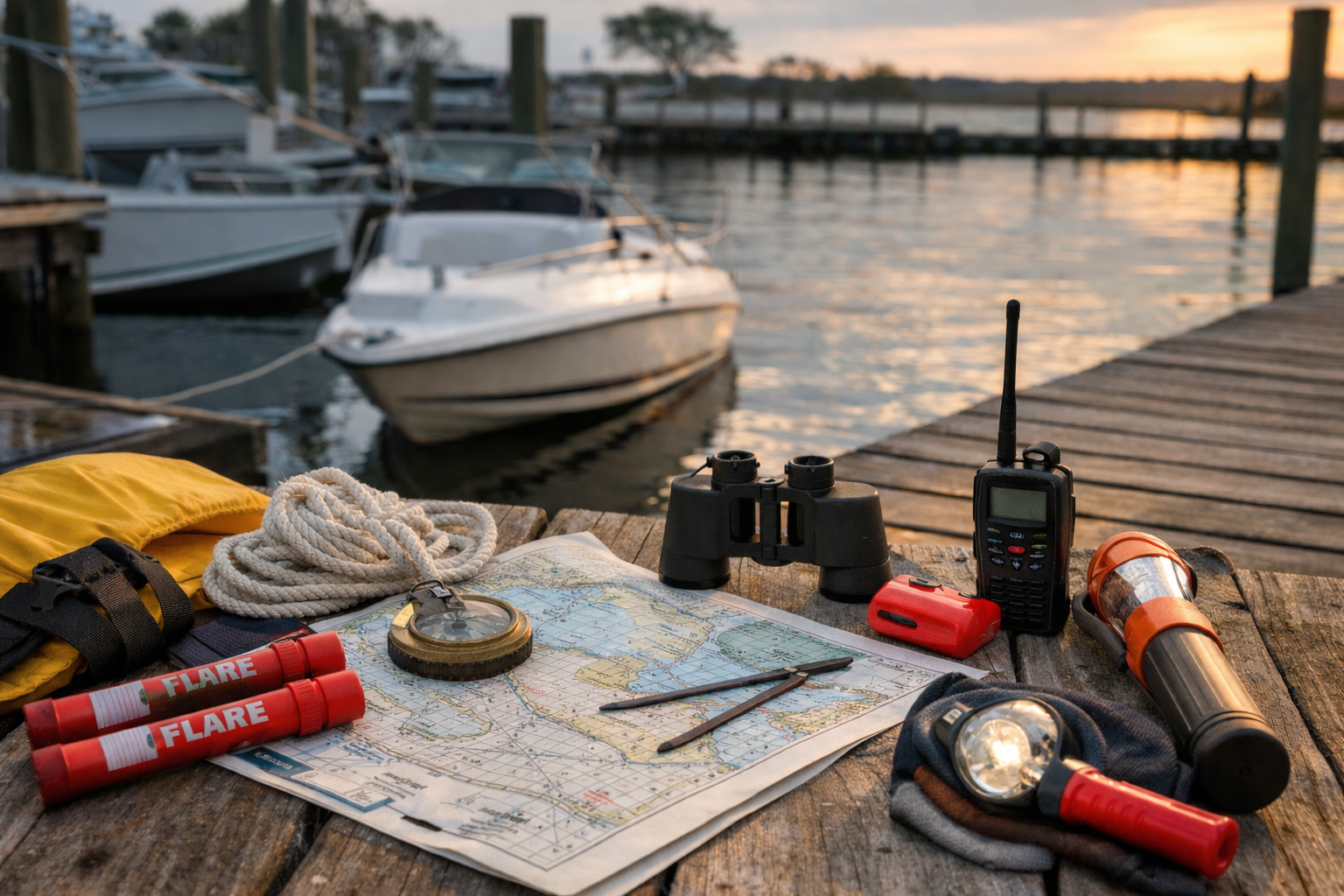
The last king cake box is in the trash, the parade barriers are stacked in the city yard, and by late February, the water temperature at the Dog River Bridge is climbing back up. That's the signal: the boats that have been sitting since November are getting uncovered, batteries are getting charged, and the spring launch list at every marina from Fairhope to Perdido is filling up fast. But a clean hull and a full fuel tank won't save you if you don't know what a day shape is, can't read a channel marker at dusk, or freeze when the VHF crackles with a Pan-Pan call two miles off your stern. The window between Mardi Gras and the first warm Saturday in March is when smart boaters audit their skills, replace expired flares, and learn what they should have learned before last season ended.
Most boating accidents aren't dramatic—they're boring. Someone misjudges the northwest wind and gets pushed into a piling. Someone runs a channel at low tide because they assumed the GPS depth was current. Someone calls Mayday when they should have called Pan-Pan and ties up Coast Guard resources that could have been elsewhere. The Rules of the Road aren't suggestions—they're the syntax of the water, and if you don't speak the language fluently, you're a liability to yourself and everyone within a half-mile radius. Reading up on boat skills, making checklists, or passing a written test is cheaper than learning navigation through trial and error, and "trial and error" on the water usually means a salvage bill or worse. If you're planning to captain anything this season, the question isn't whether you need training—it's whether you want to figure out what you don't know now or in the middle of Perdido Pass on a busy Saturday.
For the Professional (or the Aspiring One)
For those who want to go professional—or just want to be trained like a professional—The Captain School in Gulf Shores offers the OUPV "Six-Pack" license course and a full range of advanced maritime training. Captain Jack Sanzalone, the school's owner and primary instructor, brings 43 years of experience starting with 30 years aboard U.S. Navy submarines, followed by building and operating successful commercial tour boat and fishing charter businesses in Southwest Florida. As a USCG Licensed Master, USCG Assessor, and past president of the Maritime Education Standards Counsel, Captain Jack is certified to teach everything from basic Six-Pack licensing to Master 100/200 upgrades, Bridge Resource Management, Advanced Firefighting, and Commercial Assistance Towing. I'm currently taking the OUPV course there under Captain Clay, a retired Coast Guard Senior Chief with search and rescue experience from Alaska to the Caribbean who now operates Coast Ease with his wife. The instruction isn't theoretical—it's chart work, navigation rules, federal regulations, emergency procedures, and practical vessel handling until the material is second nature, taught by people who've spent decades in situations where competence wasn't optional.
For the Recreational Boater
If a professional license isn't the goal, the U.S. Coast Guard Auxiliary in Daphne is running its 2026 Recreational Boating Safety Class schedule at the Daphne Fire Training Center—eight hours, $45, next session March 14th. This isn't a lecture series; it's practical instruction on the equipment you're legally required to carry and actually know how to use: how to deploy a throwable flotation device in current, when your flares are expired (check the stamp—most are only good for 42 months), what the difference is between a Type I and Type III PFD and why it matters in rough water, and how to make a distress call on VHF Channel 16 without fumbling through the procedure while water's coming over the bow. The course also covers local navigation hazards—the shoals off the Eastern Shore, the traffic patterns at Perdido Pass, the submerged structure in Mobile Bay that doesn't show up on consumer GPS. It's the kind of knowledge that prevents the 1600 call to TowBoatUS that costs $600 and ruins your Saturday.
Close the Gap Before the Crowds Arrive
The goal isn't to make every boater a licensed captain. The goal is to make sure that when the first 80-degree Saturday arrives and the boat ramps are backed up to the highway, the people on the water know what they're doing. A clean boat holds value, but a trained operator prevents loss—of money, of time, of safety, and occasionally of life. The Coast Guard doesn't publish statistics on "near-misses," but every experienced boater has a story about the close call that didn't have to happen, and it's almost always because someone didn't know something basic. Use February and early March to close those gaps. Take the Auxiliary course, enroll at The Captain School, or at minimum go through your safety kit and replace anything that's expired, corroded, or missing. When the spring run starts, the water won't care whether you were prepared—but everyone else on it will notice.