
The Art of Going Nowhere by Boat
Take advantage of the warm days this winter.
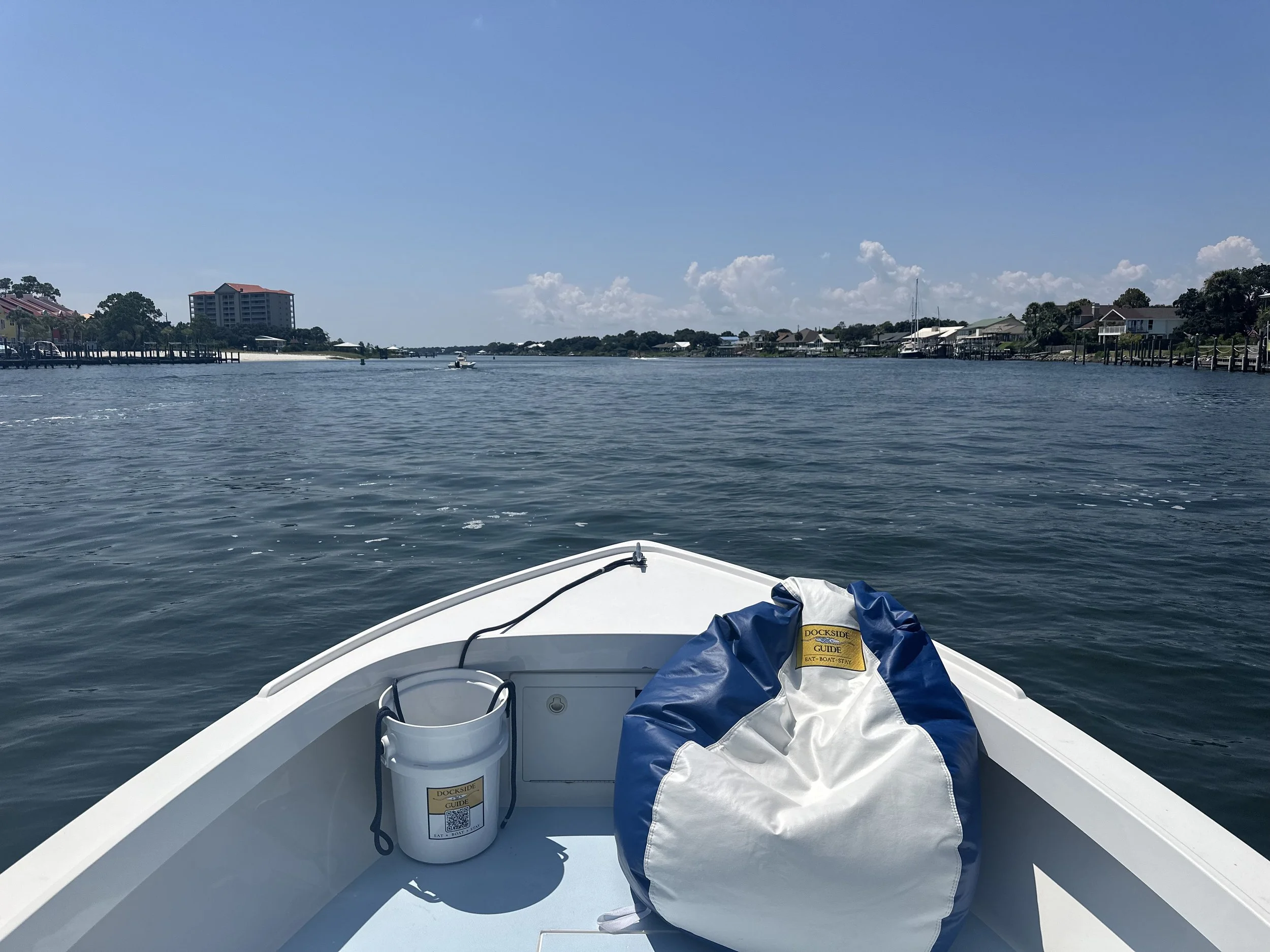
In the early spring and late winter, my favorite boat days don’t have a schedule; they only have a direction. I like them to start about 9:00 when I still need a light jacket, but the sun promises to be warm at noon. This particular adventure begins on the quiet edge of a cool morning, launching into Perdido Bay not with a roar, but with a gentle push. The goal isn’t to get anywhere fast—speed is the enemy of leisure—but to be in motion. As the sun burns off the low mist, the plan is vague: a meandering exploration of the coastline where the water turns to glass and the only deadlines are the ones we ignore. We aren’t racing the clock; we are dissolving it.
Before we settle, we wander. We point the bow toward the hidden veins of the bay: Soldiers Creek and Palmetto Creek. At this time of year, these aren’t places for water skiers or speed runs; they are sanctuaries of stillness. Up Soldiers Creek, the world narrows into a corridor of pine and oak, offering a “peaceful combination of you and nature” where the water is often calm enough to see your own reflection. A detour into Palmetto Creek offers a “quiet haven” where dolphins frequently break the surface, disturbing the silence just enough to remind you that you aren’t entirely alone. If the tide is right, I will go up Spring Branch as far as I can just to see it. These side trips are the practice rounds for doing nothing, washing away the urgency of land life in the wake of the boat.
By noon, the most important ritual of the day takes place: the breaking of the Boat Chicken. As any serious boater knows, this is not a meal to be improvised. Following the strict laws of the cooler, we have packed Publix fried chicken, purchased the night before, specifically so it could be eaten cold. As James London notes, cold chicken “cools you down when it’s hot out and you can taste it better,” making it the perfect fuel for a lazy drift. And, of course, it is bone-in; to bring tenders on a boat is, as the purists say, an offense worthy of being thrown overboard.
Eventually, we find our final pause at Ingram’s Bayou. Tucked away off the Intracoastal Waterway, this “hurricane hole” is famous for its “splendid isolation” and protection from the wind. The anchor drops into the soft mud, holding fast on the first try. Here, surrounded by a wall of Alabama forest with no buildings in sight, the water is a flat sheet of dark emerald. The engine cuts off, and the sudden silence is heavy and sweet.
This is where the “death of ambition” happens for the day. There are no side trips left, no course to plot. I pick up a book, not to finish it, but to let it rest on my chest while I watch the light change in the trees. We have achieved a state of rest —a conscious pause that produces nothing of economic value, leaves no trace, and solves no problems. We are simply anchored, eating cold chicken, existing entirely in a moment that refuses to be useful. And that is exactly the point.
Take time to go slowly somewhere you have not been. Before the speed and busyness of summer boat traffic starts up.