
The North Wind Blowout: Reading the Winter Bottom
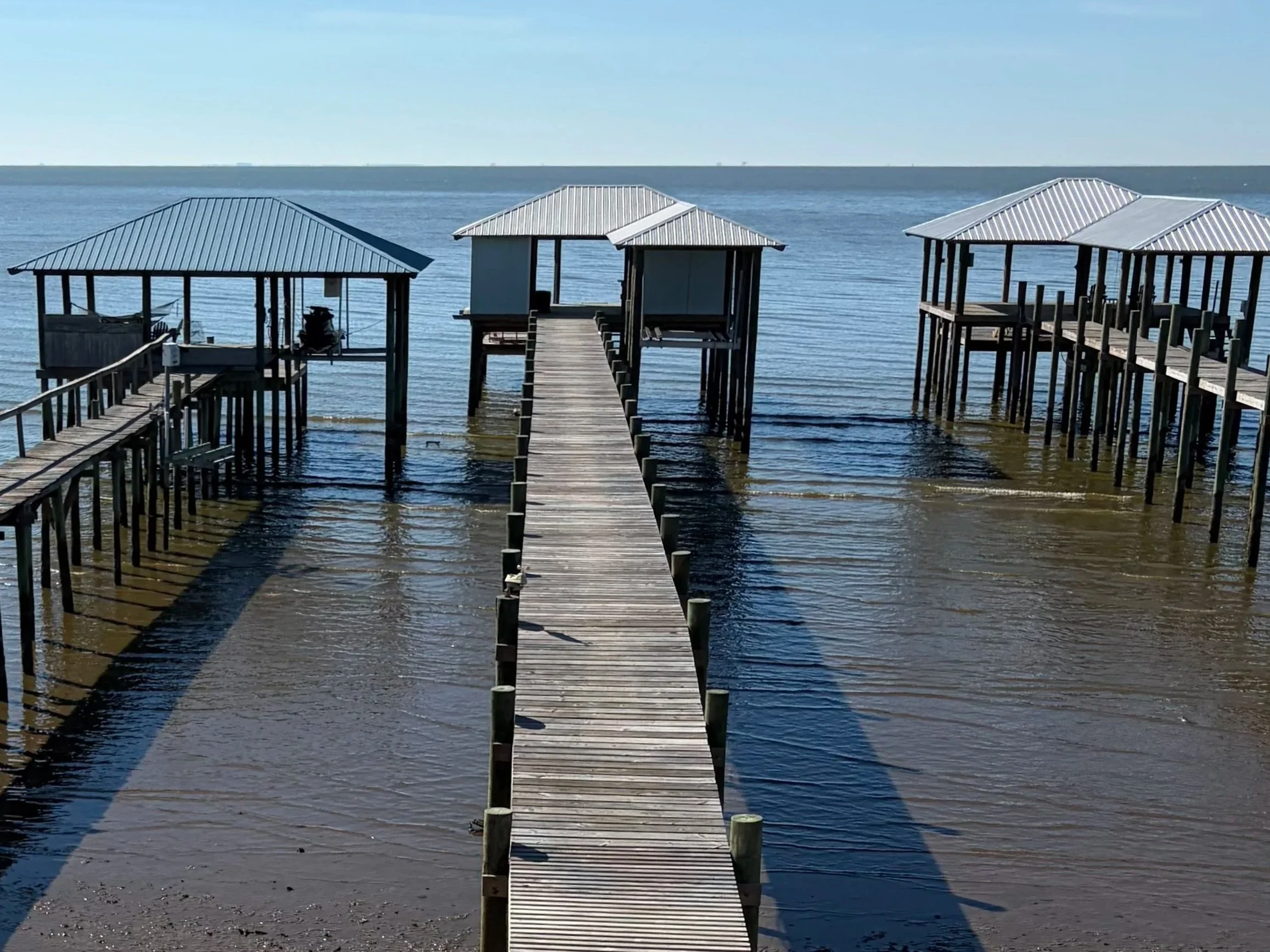
There’s a specific kind of silence that hits the Mobile and Perdido Bays when the north wind blows. It’s not just the chill; it’s the vanishing act. You walk down the dock expecting the familiar lap of water against the pilings, and instead you’re looking at exposed mud, confused crabs, and a boat lift hanging high and dry over a puddle.
This photo from today captures the essence of a classic Gulf Coast “blowout tide.” You see the once-vibrant waters transformed into vast stretches of exposed mudflats. Boats that usually float effortlessly are now awkwardly positioned, high and dry, while confused crabs scuttle across the uncovered ground. For the uninitiated, it looks like a disaster. For the seasoned captain, it is both a warning and an opportunity.
Here is your navigational briefing on what’s happening, why it matters, and how to keep your hull (and your pride) intact.
The Mechanics: Where Did the Water Go?
While our astronomical tides (moon and sun) usually give us a predictable 1-to-2-foot range, meteorological tides (wind and pressure) rule the winter.
Mobile and Perdido Bays are essentially massive, shallow bowls. When a stiff winter cold front barrels through, it brings prolonged, heavy winds from the north or northwest. Because the bays open to the south into the Gulf of Mexico, that north wind acts like a leaf blower, physically pushing the water column out of the bay and into the Gulf.
In the summer, you might have four feet of clearance here. Today, you’re looking at six inches.
Blowouts typically occur during the colder months when a significant winter cold front moves in, bringing strong winds from the north or northwest. These conditions, combined with an astronomical low tide, result in a wind-driven “setdown,” causing water levels to drop by two to three feet below the average low-water mark. Being aware of these weather patterns allows boaters to better anticipate and navigate these sudden changes in water levels.
Navigational Hazards: The “Thin Water” Warning
If you must leave the dock during a blowout, switch from cruise mode to tactical mode. The margin for error is zero.
The Cooling System Killer:
The water remaining in the channels is hyper-turbid, churned up with silt and mud. Even if you aren’t dragging bottom, your raw water intakes are sucking up a slurry that can clog heat exchangers and shred impellers in minutes. Imagine trying to suck a thick milkshake through a tiny straw—that’s the strain your engine faces. Watch your temp gauge like a hawk. After navigating these conditions, it’s crucial to thoroughly flush the cooling system to remove accumulated debris, which helps prevent damage and costly repairs.
The Lower Unit Tax:
Dry sandbars and hidden reefs replace summer shortcuts. Hitting one can severely damage lower units and shafts.
The “Suction” Trap:
Soft mud bottoms create a suction effect. If you run aground, the hull settles into the mud. Trying to power out often just digs the stern in deeper and overheats the engine. In a blowout, kedge anchors and patience are your only friends.
The Silver Lining: Scouting Season
While the boat stays on the lift, the wise captain goes to work. A blowout tide is the single best time to scout your home waters.
Map the structure: Take photos of the exposed bottom. Note the location of old pilings, oyster rakes, and drop-offs that are usually invisible. This is “local knowledge” gold for the fishing season.
Inspect the infrastructure: Walk the dock. Check the pilings for shipworm damage, which is usually hidden underwater. Check your boat’s zincs and through-hulls if they are exposed.
Winter maintenance: This is the universe telling you to service your trailer or organize the tackle locker.
The Captain’s Protocol
If you are looking at a scene like the photo above, here is the standing order:
Check the gauge: Don’t trust the tide chart; trust your eyes. If the pilings are naked, stay put. Watch for visual cues such as exposed mudflats, which indicate low water levels. Notice the height of the dock relative to the waterline; significant differences can signal drastic tide drops. Also, pay attention to the color of the water—murkier water often indicates higher sediment levels, suggesting disturbed bottoms and potential hazards.
Wait for the shift: As soon as the wind clocks around to the east or south, the water will rush back in—sometimes faster than you expect.
Secure the vessel: Ensure your boat isn’t resting on the bottom while in the sling. If the tide drops too low, the hull can settle on the mud, and when the tide returns, the suction can hold it down, potentially swamping the boat or stressing the lift cables.
The Bottom Line
Dockside Life means respecting the rhythm of the bay. Today, let the bay rest. Pour a coffee, put on your jacket, and instead of heading out, take this time to observe, plan your next trip, check over your gear, or simply enjoy the unique view. Make the most of this opportunity for preparation and learning.