
Growing the Bay Back: How Dock Owners Are Rebuilding Our Oyster Reefs
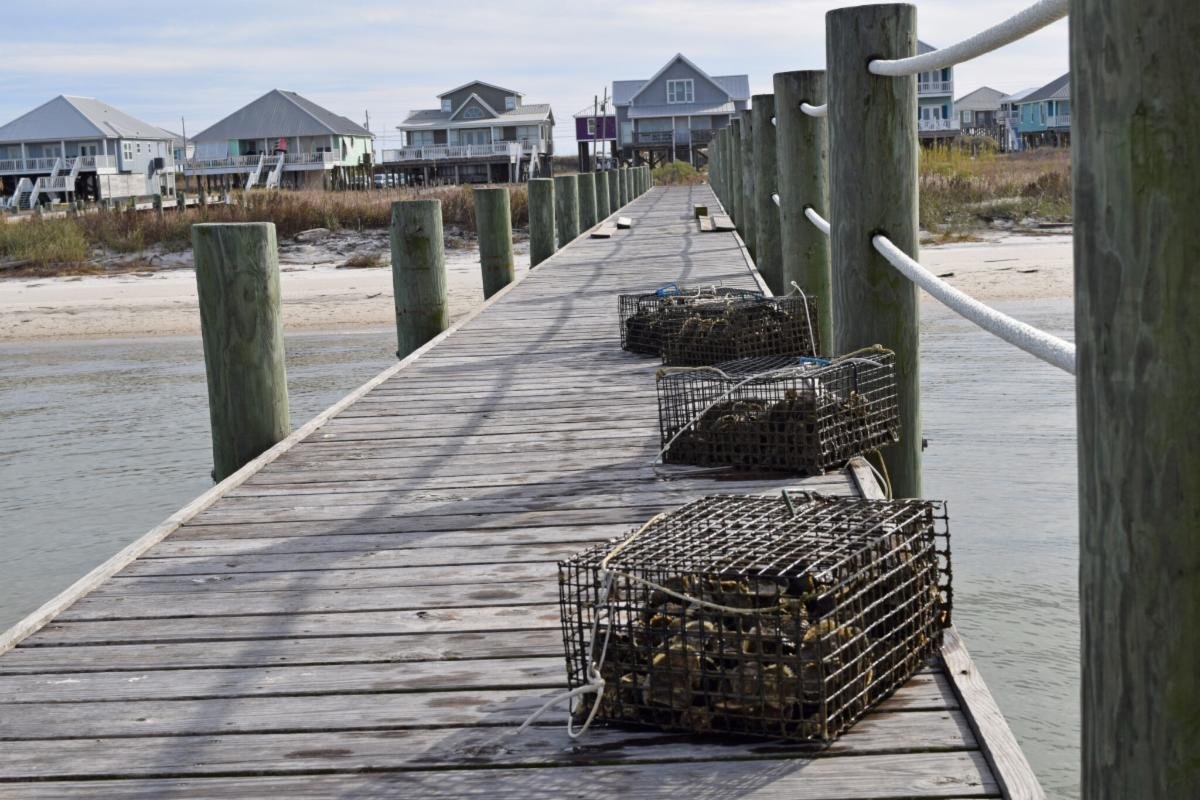
Somewhere beneath the docks of Mobile Bay and the Mississippi Sound, a quiet restoration is underway — not by dredge or by decree, but by the hands of everyday waterfront residents tending wire cages full of young oysters. The Gulf Coast Oyster Gardening Program, coordinated by Auburn University’s Marine Extension and Research Center out of its Mobile offices at 50A Midtown Park West, has spent more than two decades turning dock owners, retirees, and school groups into citizen conservationists. The premise is elegantly simple: volunteers receive baby oysters — called spat — that have been spawned and set onto recycled shells at the Auburn University Shellfish Laboratory on Dauphin Island. They hang them in cages beneath their piers, tend them through the summer and fall, and then return the grown oysters to be planted on restoration reefs that desperately need the reinforcement. It is a program that asks very little of its participants — a few minutes of cage maintenance each week — yet delivers an outsized return for the health of our coastal waters. For those of us who make a life on the water, it may be the most meaningful thing you can do without ever leaving your dock.
Alabama: Gearing Up for 2026
On the Alabama side, the 2026 season is already taking shape. The AUMERC team has completed 260 brand-new oyster garden cages for both new and returning sites, and shell preparation is well underway — cleaning, drying, and bagging recycled shells collected from seafood restaurants across the Gulf Coast in anticipation of the spring and fall spawns at the Auburn Shellfish Lab. The science behind the operation is remarkable: lab researchers place adult broodstock oysters into individual containers and manipulate water temperature to trigger spawning, which naturally occurs when the water reaches around 74 degrees. Millions of free-swimming larvae are then reared in thousand-gallon culture tanks — roughly forty million per vessel — before being set onto the recycled shell cultch, where they attach and begin their transformation from microscopic speck to the hard-shelled bivalves that volunteers will pick up at distribution points around the bay come June or July. It is a pipeline that stretches from the controlled precision of a university hatchery to the sun-bleached pilings of a backyard pier, and every link in that chain matters.
Mississippi: A Season by the Numbers
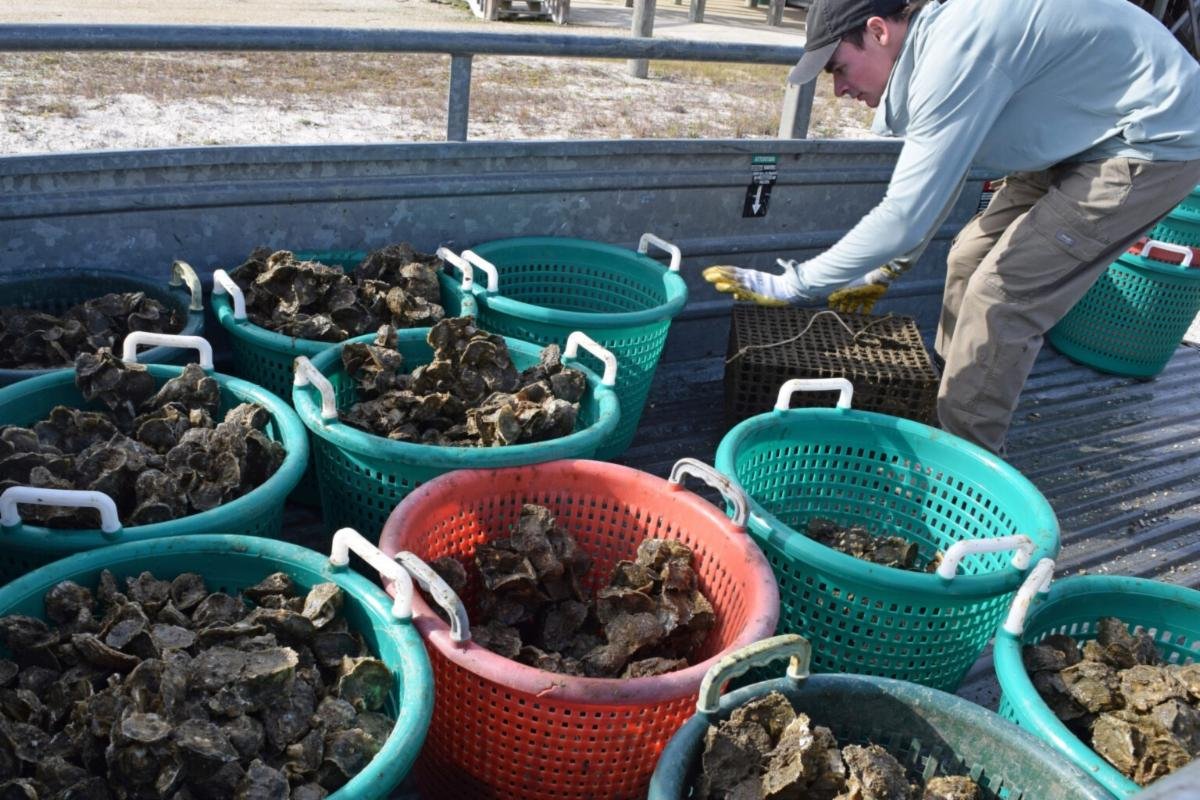
The latest season’s numbers from the Mississippi side of the program tell a compelling story. Teams from the Mississippi Department of Marine Resources, AUMERC oyster gardening staff, and dedicated student interns from St. Stanislaus collected oysters from fifty-four volunteer sites along the coast last month, pulling a total of 68,695 oysters from gardens stretching from the western Sound to the eastern shore. Eastern Mississippi sites averaged 43 millimeters in shell size, while the western sites produced heftier specimens averaging nearly 51 millimeters — a testament to the variable growing conditions and the attentive care of the gardeners at each location. Those numbers represent approximately 3.34 acres of restorative reef potential, carrying an inflation-adjusted economic value of over ninety thousand dollars, and that figure doesn’t account for a single volunteer hour. Every one of those oysters has been planted on a DMR-approved reef in the Mississippi Sound, where they will spend the rest of their lives filtering water, stabilizing habitat, and anchoring a living ecosystem that supports more than three hundred species of marine life.
68,695
OYSTERS COLLECTED (Mississippi 2025–26)
3.34
ACRES OF REEF Restoration Potential
$90,602
ECONOMIC VALUE Inflation-Adjusted
The Work of a Gardener
The work of an oyster gardener is not glamorous, but it is deeply satisfying. Once you receive your mesh bags of spat-on-shell, you divide them among your cages and deploy them horizontally beneath your dock, ideally where tidal flow is strongest and water depth stays at least two feet at low tide. Each week, you haul the cages up to check for predatory oyster drills, scrub off accumulating algae, and let the cages air-dry in the shade to keep biofouling in check. The program tracks growth data throughout the season, with gardeners submitting measurements that chart the trajectory from four-millimeter spat to harvest-ready clusters. During the off-season, cages should be pulled and stored out of the water entirely. It is the kind of hands-on environmental stewardship that makes you feel genuinely connected to the water beneath your feet — a reminder that the bay we boat on, fish in, and gather around at oyster roasts is not just a backdrop to coastal life, but a living system that needs our help.
“We know of 300 different species of vertebrates and invertebrates that use oyster reefs for habitat at different stages of their life cycles.”
— Dr. P.J. Waters, Auburn University Marine Extension & Research Center
Your Dock, Your Bay, Your Move
If you own waterfront property with a dock on Mobile Bay, the Mississippi Sound, or the surrounding coastal waters, the program is actively recruiting for the 2026 season and would like to hear from you. New applicants can apply through the program’s website at oystergardening.org, and returning gardeners are encouraged to confirm their participation as soon as possible by emailing oystergardening@auburn.edu — several Alabama gardeners have not yet confirmed whether they plan to continue, and the team needs a headcount to properly allocate cages and spat. If you need additional or replacement cages, the AUMERC staff will provide them before the season begins at no cost. For those of us who have spent a lifetime on these waters, who have watched the reefs diminish and the harvest dwindle, this program represents something rare and hopeful: a way to give back that is as simple as hanging a cage and checking it once a week. The bay gave us everything — the least we can do is grow it back, one oyster at a time. Follow the program’s work on Instagram at @aumerconthecoast, and consider sharing the opportunity with a neighbor who has a dock and a few minutes to spare.
⚓ ⚓ ⚓
Get Involved: 2026 Oyster Gardening Season
New Volunteers: Apply at oystergardening.org
Returning Gardeners: Confirm your participation at oystergardening@auburn.edu
Phone: (251) 471-2124
Address: 50A Midtown Park W, Mobile, AL 36606
Instagram: @aumerconthecoast
Season Timeline: Spat distribution in June/July · Oyster collection in November · Off-season: store cages out of water.
Partners: Alabama Cooperative Extension System · Mobile Bay National Estuary Program · MS-AL Sea Grant Consortium · Mobile Baykeeper · MS Dept. of Marine Resources · AL Dept. of Conservation and Natural Resources